
Ozempic Muscle Loss: The Traveling Professional's Survival Guide
Up to 39% of the weight lost on Ozempic is muscle and bone. Here's the science, the 20-minute hotel workout, and what pharma won't mention.
NUTRITION
Table of Contents
Why Traveling Professionals Should Skip GLP-1s (And Do This Instead)
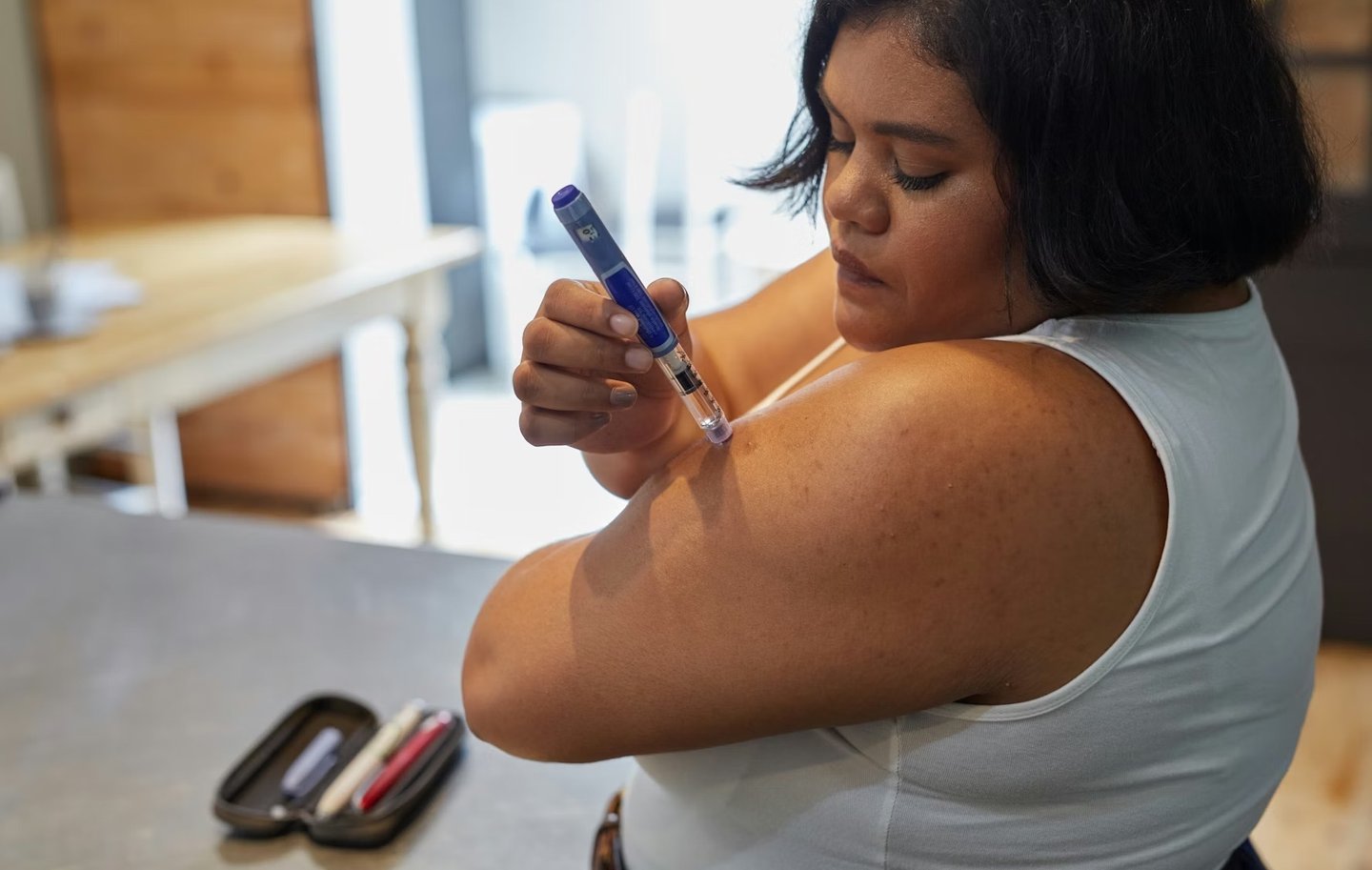
Why Traveling Professionals Should Skip GLP-1s (And Do This Instead)
Up to 39% of the weight you lose on Ozempic or Wegovy is muscle and bone. Not fat.
Your hip bone density drops at double the natural aging rate in a single year on semaglutide. The FDA printed the hip fracture warning on the Wegovy label itself.
86% of users stop the drug within three years. Two-thirds of the lost weight returns inside twelve months. The muscle doesn't.
As of April 2026, 3,546 federal lawsuits are pending against Novo Nordisk and Eli Lilly. The allegation: the manufacturers didn't tell patients what the drugs actually do.
That's the paragraph the ad doesn't read to you.
You fly Monday to Milan, Wednesday to Frankfurt, Friday home. Twenty minutes for training doesn't exist in that schedule, but a prescription does, and it works exactly as promised: the weight comes off, the suit fits, and the mirror stops telling you the truth.
The drug isn't selling you weight loss. It's selling you a loan, collateralized by the tissue that keeps you standing at 70.
The bill isn't due next year. It's due the decade you planned to spend on the things that actually matter, travel, family, the people you love, the life you built this career to afford.
By the end of this guide, you'll know what the drug actually costs and why traveling professionals pay the highest price.
You'll also know the twenty minutes a day that make the injection unnecessary, in any hotel room on the continent, with nothing but the suitcase you already packed.
What the Studies Don't Put in the Ads
Muscle loss is 20 to 50% of total weight lost. In the STEP 1 trial of semaglutide, participants lost 15% of their body weight. Thirty-nine percent of that loss was lean mass.
A 200-pound professional losing 30 pounds on Wegovy is losing 12 pounds of muscle, bone, and organ tissue. That muscle doesn't come back without deliberate work.
Bone density drops at double the natural aging rate. A 2024 RCT in eClinicalMedicine found semaglutide reduced hip bone density by 2.6% in 52 weeks, twice the rate of normal postmenopausal loss.
The FDA already printed the warning. From the official Wegovy prescribing information, verbatim:
"In the CV outcomes trial in adults, more fractures of the hip and pelvis were reported on WEGOVY than on placebo in female patients: 1% (24/2,448) vs. 0.2% (5/2,424), and in patients ages 75 years and older: 2.4%…"
— U.S. FDA, WEGOVY® Prescribing Information, 2025
A 5x increase in hip and pelvis fractures. On the drug's own label. Most doctors don't read it to you.
And hip fractures aren't just injuries. 17 to 25% of older adults are dead within one year of one. Ten years out, only 8.5% are still alive, versus 40% of their peers who never fractured.




The Trap Nobody Warned You About And The 20 Minutes That Exits It
Stopping is worse than not starting.
In the STEP 1 extension trial, participants who stopped semaglutide regained two-thirds of the weight within a year, and the regain came back as fat, not muscle. You end the cycle with less muscle, more fat, and weaker bones than you started. Only 14% of users are still on Wegovy after three years. The other 86% are in that cycle.
As of April 2026, 3,546 federal lawsuits (MDL 3094) allege Novo Nordisk and Eli Lilly failed to warn patients about gastroparesis, pancreatitis, sudden blindness, and death. The FDA has sent Novo Nordisk a warning letter for failing to report adverse events.
The average European GLP-1 user is 44, travels for work, and pays €200 to €400 a month out of pocket. People aged 40 to 59 make up more than half of all users. These are professionals who couldn't find twenty minutes for training, so the drug found them first.
It doesn't solve your schedule. It defers the problem and charges interest in muscle and bone.


The Bottom Line
The pharmaceutical industry isn't evil; it just isn't built for you. It's built for the shareholders who need you to refill the prescription next month, and the month after that, for as long as your card keeps clearing. Your job is the one nobody is being paid to do, keeping the body you'll still be living in at 70.
A GLP-1 prescription is not free. You pay for it in muscle, bone, metabolic flexibility, and in the morning ten years from now when you reach for a suitcase on a high shelf and something in your shoulder says no for the first time.
The bill comes due late. That's why the drug can be marketed so confidently. Most customers have already moved on by the time they notice.
So before the next appointment, a few questions worth sitting with:
What does your body need to still be doing ten years from now, and does the drug protect that, or postpone it?
How will you know if it's working? Not on the scale. In the tissue. In the bone. In the grip.
What's the version of you at 70 that this decision is voting for?
If you're already on a GLP-1, this isn't a lecture. A 2024 study showed that combining a GLP-1 with exercise preserved bone density; taking the drug without exercise did not. The drug alone demineralizes your skeleton. The drug plus three weekly resistance sessions plus 1.6g of protein per kg of bodyweight does not.
If you're going to take it, earn the right to take it:
Resistance train three times a week. The workout above counts.
Hit your protein target every day — especially when the drug kills your appetite.
Get a DEXA scan before you start and every 12 months after. Track your lean mass and bone density. Know the numbers.
The body keeps a ledger. It writes in pencil while you sleep, while you work, while you stand at a platform waiting for the 6:45 to Zürich with your coffee going cold in your hand.
Then remember what the data actually says. 39% muscle and bone. Two-thirds weight regain. 5x hip fractures on the label. 3,546 lawsuits. And the alternative: twenty minutes, three times a week, any hotel room on the continent.
You already have more control over this than the injection promises you don't.
References
Research & Data
Sword Health (2025) — GLP-1 muscle loss comparison, 20–50% lean mass. swordhealth.com
Harvard Science Review (Feb 2026) — STEP 1 trial 39% lean mass. harvardsciencereview.org
Hansen et al. (2024), eClinicalMedicine — RCT on semaglutide and bone density. thelancet.com
U.S. FDA — WEGOVY® Prescribing Information (2025) — Verbatim hip and pelvis fracture warning. accessdata.fda.gov
Wilding et al. (2022), Diabetes, Obesity and Metabolism — STEP 1 extension, weight regain. pmc.ncbi.nlm.nih.gov
HealthVerity (2025) — 14% three-year Wegovy persistence. healthverity.com
Creo Clinic (Nov 2025) — UK/EU GLP-1 demographics. creoclinic.com
CDC WONDER Analysis (2025) — Hip fracture mortality. ncbi.nlm.nih.gov
10-year hip fracture survival study (2024) — 8.5% ten-year survival. ncbi.nlm.nih.gov
Robert King Law Firm (April 2026) — MDL 3094 & 3163 case counts. robertkinglawfirm.com
Drugwatch (April 2026) — FDA warning letter to Novo Nordisk. drugwatch.com
Image Credits
Sweet Life — Person holding an insulin injection pen. Photo on Unsplash via @sweetlifediabetes.
SUNDAY II SUNDAY — Two women on exercise mats in a gym. Photo on Unsplash via @sunday2sunday.
Mikhail Nilov — Senior couple stretching on yoga mats. Photo on Pexels.
Keep Learning — Join the Newsletter
Our newsletter shares the research and the uncomfortable truths the fitness industry won't say out loud.
It's built for fitness professionals who want to arm their clients with the information pharma companies would rather they never see.
"The fitness industry sells shortcuts. We sell the truth, so you can outlast them."
The Brief
Results vary. Individual commitment and consistency determine outcomes.
Privacy Policy | Disclaimer | Transformation Policy | Contact
© 2025 INDUSTRIAL GYM 101
All rights reserved.